
The following figure is likely to interest you: 76 percent of online buyers prefer to purchase information in their native language, and 40 percent will never purchase products offered on websites in other languages.
Think about that for a moment. Almost half of your potential customers might be taking flight before you can even touch their product or service because you might not be speaking the language they like.
To leaders and executives operating in modern, globalized markets with a global clientele, language is not just a communication challenge but a business-critical aspect that directly affects your bottom line. As your organization enters new markets, Multi- Language support services are no longer a nicety but a competitive requirement.
This ultimate guide will discuss the true meaning of multi-language support services, its importance to enterprise growth, how it enhances customer satisfaction, the difficulties you will encounter, and, above all, how new AI technology can help make it scalable and affordable. Whether you are launching your first non-English support channel or optimizing an existing multilingual operation, you will find practical strategies to achieve quantifiable outcomes.
What are Multi-Language Support Services?
Multi-Language Support Services are much more than just translating your FAQs page. It is about providing smooth, culturally compatible customer care experiences across a variety of languages and channels.
Being Beyond Translation: The Whole Range of Multilingual Call Center Services
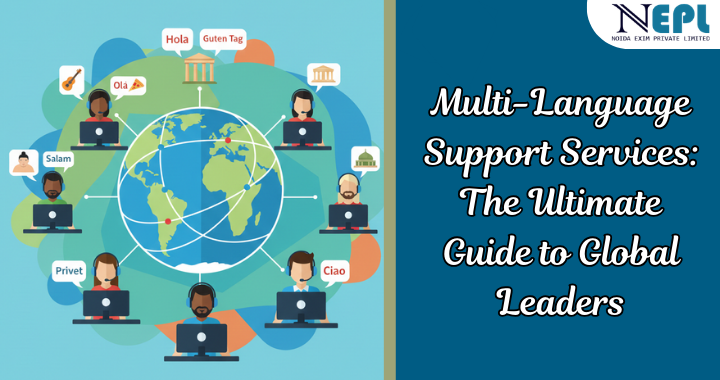
Multilingual call center services are channels through which clients can communicate with your brand in their preferred language across all touchpoints: phone, email, chat, social media, and self-service portals. It is not only what you say, but how you say it. There are cultural touches, local slang, and local tastes, each of which contributes to creating authentic experiences.
Indicatively, a direct form of communication that is effective in Germany will be rude to customers in Japan, where indirect, polite communication is valued. These cultural dimensions are taken into consideration by true multilingual customer support.
Types of Multilingual Call Center Services:
Organizations that outsource multilingual call centers want to provide customer service in three ways:
- Human actors: Native/fluent speakers offering individual guidance.
- Chatbots based on AI: Automation of answering basic inquiries in different languages.
- Hybrid models: The efficiency of AI and human experience in solving complex problems.
Hybrid models are becoming common among modern enterprises. Gartner reports that 80 percent of customer service organizations will utilise generative AI by 2026, meaning it will be feasible to execute routine multilingual call center services at scale and to recruit native speakers to handle cases that require cultural sensitivity or problem-solving.
The Difference Between Multilingual Call Center Services and Localized Support
Here is a minor yet significant difference: multi-language support services know your customers’ language, whereas localized support knows their culture. Localization will also cover adapting everything, such as date formats, currency, payment options, and customer service working hours, to match local time zones.
The best international support plans are those that incorporate both to ensure that the customer does not feel alone, not only because they cannot speak the same language, but also because they share a similar culture.
Why is Multilingual Support Services Important to the Growth of an Enterprise?
Let’s talk business impact. When you are a Customer Services leader making arguments in favor of multilingual support to your C-suite, you have to have compelling justification for ROI. When businesses outsource multilingual call center services, the data tells a clear story.
- The Business Case: Revenue Impact
Being able to assist in the language of your customers, native or of their preference, can play a big role in increasing revenue and customer satisfaction. Consider the costs of acquiring your customers. Now consider that you lose 40% of your target audience due to language barriers. It is not only a loss of revenue but also a wasted marketing investment and missed growth opportunities.
- Customer Loyalty and Retention.
That’s where the multilingual support services acquire the power of retention. An industry report reveals that customers tend to interact with a company that supports them in their own language, and customer retention rates increase when a company has trained multilingual call center service agents.
At a time when most leaders claim that the best thing to do is to focus on customer service, language accessibility is among the most influential levers that you can move. It is not merely about resolving problems, but about providing quality multi-language support services to improve the customer experience.
It is important to gauge this impact. CSAT tracking tools enable you to measure the impact of language-specific support on your satisfaction scores across various markets.
- Competitive Differentiation
Since the majority of organizations (80 percent) anticipate competing on customer service, multilingual call center services are a clear differentiator.
Companies that provide customers with a better understanding of their products in their native language are the winners when two products are similar in terms of features and price.
Enterprise buyers demand that vendor support teams be available to listen to the customer and communicate in the same business language. It indicates investment in the joint venture and the ease of tension in complex uses, and it also helps create a global footprint.
The Future of Multilingual Call Center Services
Innovation in this area is very fast. Here’s what’s coming.
- Recent developments in AI on Real-Time translation.
Next-generation AI models will capture even more nuance, including regional dialects, slang, and code-switching (when a speaker uses more than one language in the same conversation). The gap between the quality of native speakers and that of AI translation services is narrowing.
- Voice AI and Accent Recognition.
The recognition of accents is becoming faster. In the future, systems will learn accented English in the same way they learn the local dialects of Spanish or Mandarin. It implies that your voice AI will not be annoying to its customers by failing to comprehend their pronunciation.
- Predictive language Preferences.
AI will choose the customer’s language preferences based on context before the customer even says a word, using the customer’s IP address, interaction history, account details, and behavior trends, to proactively provide support in the most probable preferred language.
The further development of voice AI Agents will be able to recognize emotional tone, such as frustration, satisfaction, confusion, etc., in different languages, and AI will be able to control the tone and know when to send the matter to human agents based on emotions and not only on the level of conversation difficulty.